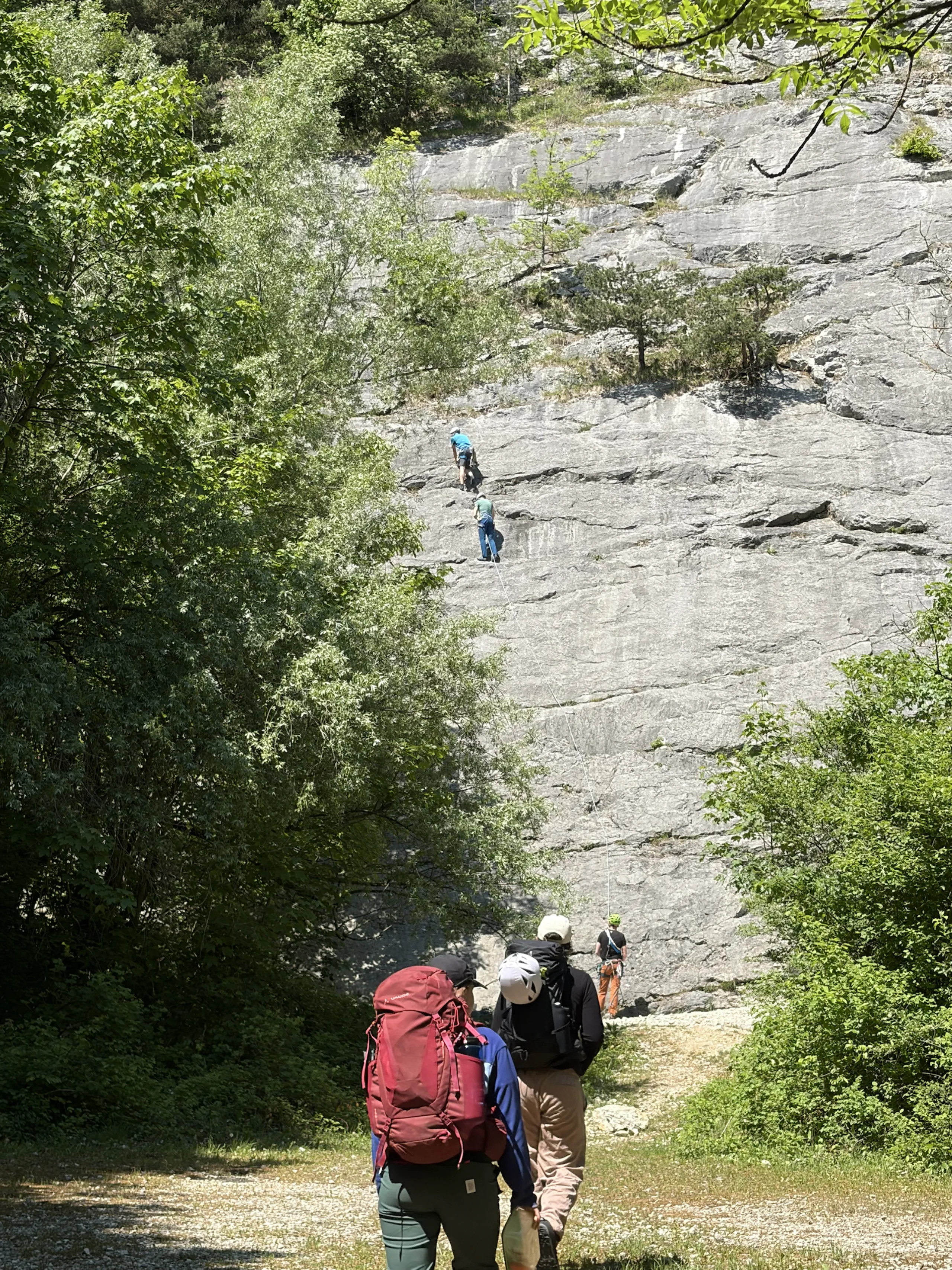
Over the weekend, we went to the Platte Oberbuchsiten climbing area in Egerkingen, Switzerland, to learn multipitch climbing. After three days, I realized that the hardest part was not climbing upward. It was learning how to manage people, ropes, gear, and fear on a rock wall more than a hundred meters high.
Driving Carefully in a Foreign Country
German highways often have no speed limit, and since I had only driven in Germany, I had grown used to not watching the dashboard too closely on the highway. But that does not work in Switzerland. Even a slight speeding violation can lead to a heavy fine if a camera catches you. So as soon as we entered Switzerland, I turned on the car’s speed limit function and drove with extreme caution. I did not dare turn it off the whole way.
At one point, because we had crossed a border, the network connection failed and the navigation stopped working properly. I was driving on the highway, and the others in the car became very nervous about it. So I made a quick decision and pulled into the nearest rest area, fixed the network and navigation, and finished the rest of the drive smoothly.
I stayed completely calm the entire time. Looking back afterward, even I was surprised by it.
A Carefully Tended Swiss Countryside
That evening, we stayed in a tent cabin. It was part of a campsite prepared for sports that require large open spaces, such as tennis and horseback riding. But when we first drove in on the first day, many families were walking toward the site, and they did not look as if they were simply there to stay overnight. At the entrance, volunteers in yellow vests guided cars onto a huge lawn, which was already full of cars with local license plates. Half doubtful, we took out our luggage and followed the crowd inside.
It turned out that an agricultural fair was taking place there. But rather than a fair, it felt more like a local village festival, with not only machinery and equipment, but also small amusement stalls and a performance stage. At night, huge speakers played a monotonous beat that shook the bed beneath us until the early hours of the morning. The Swiss really do have a lot of energy. It was just not ideal for sleeping.
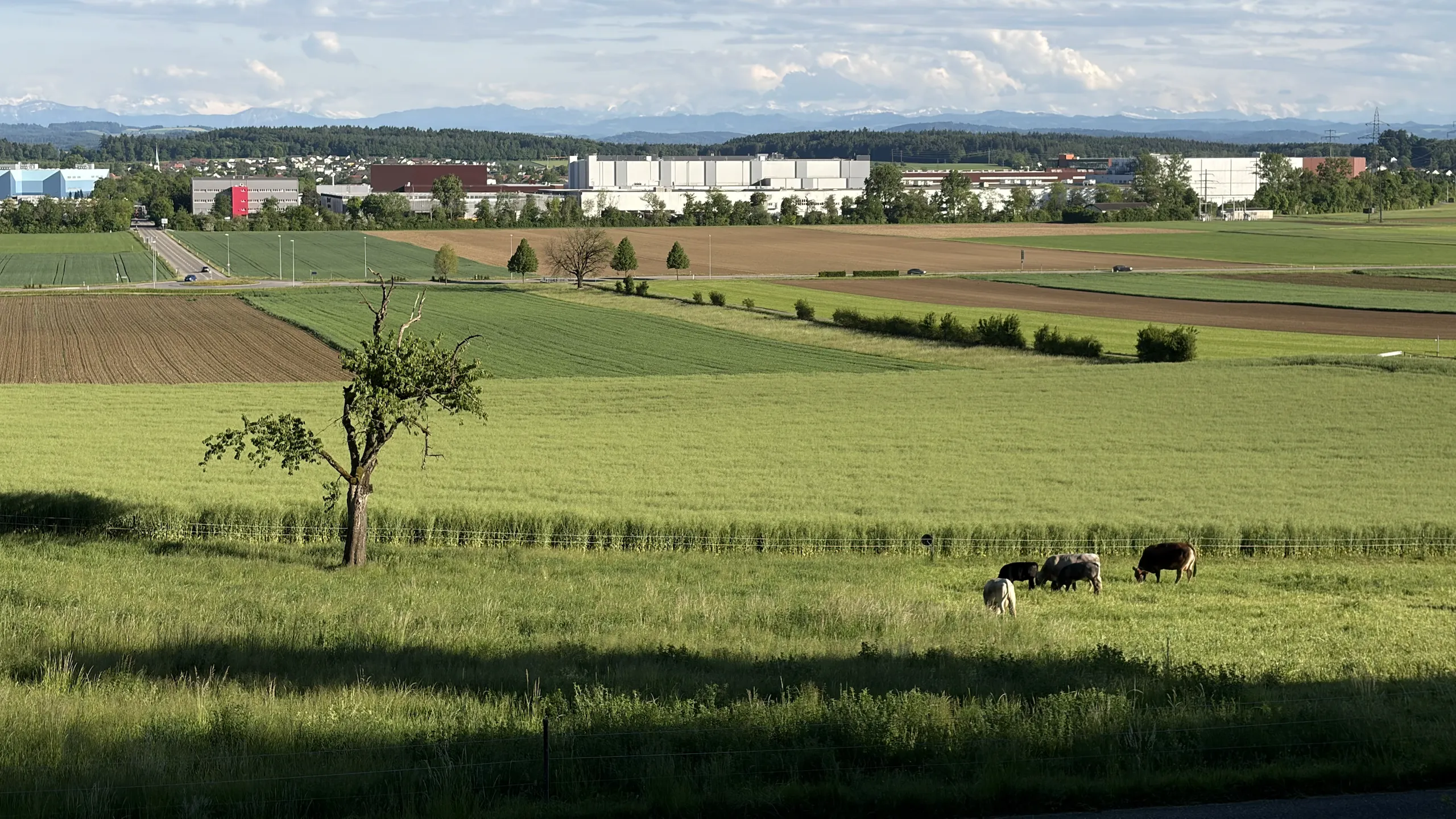
There were many animals in the Swiss countryside, and each of them seemed to be living a rather refined life.
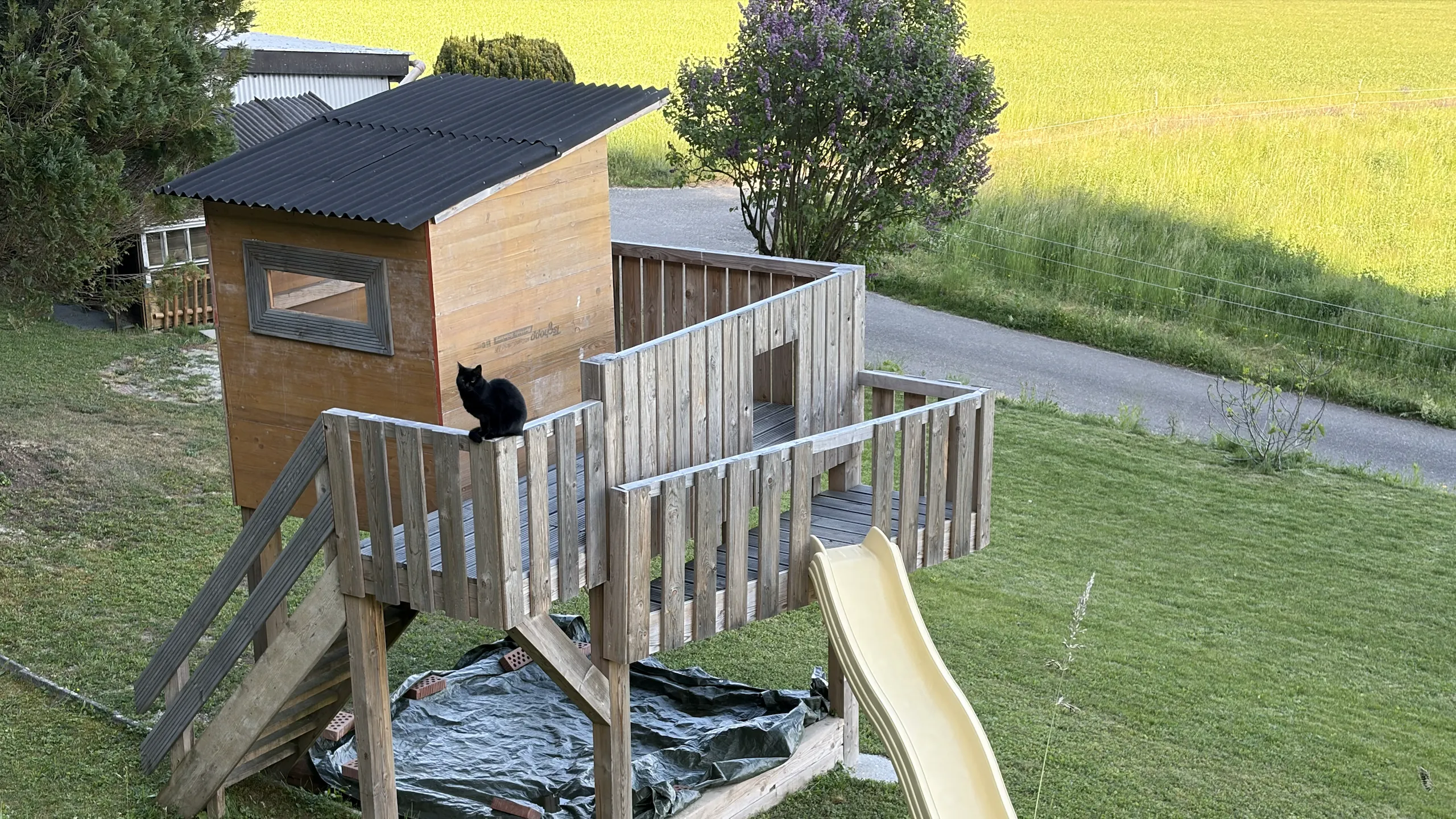
A small black cat near the parking lot arched its back high. When the sunlight fell on it, its fur shone.
Early in the morning, I could hear horses neighing nearby. The horses farther away lowered their heads and quietly ate grass, while the ones closer to us circled along the fence, showing their longing to run freely. They also brought waves of horse manure smell with them. On the mountain road back, we saw another horse. Its owner signaled to us to hold the climbing gear at our waists so it would not make any sharp metallic sounds, while at the same time pulling the horse’s head to the other side so it would not be attracted by the shiny metal. We joked that perhaps this horse was not especially suited for climbing.
Alpacas and llamas also appeared at the fair. It was the first time I had seen them together, and also the first time I learned the difference between them. Alpacas are smaller, timid and gentle, and are mainly kept for their wool. Llamas are larger, more independent and more irritable. They are often used for carrying loads, and their special skill is spitting at others. When I took a photo of a llama, it showed me its big teeth and looked at me with an expression I could not quite describe. If its relative, the alpaca, were not so cute, I would find it hard to feel any affection for this creature.
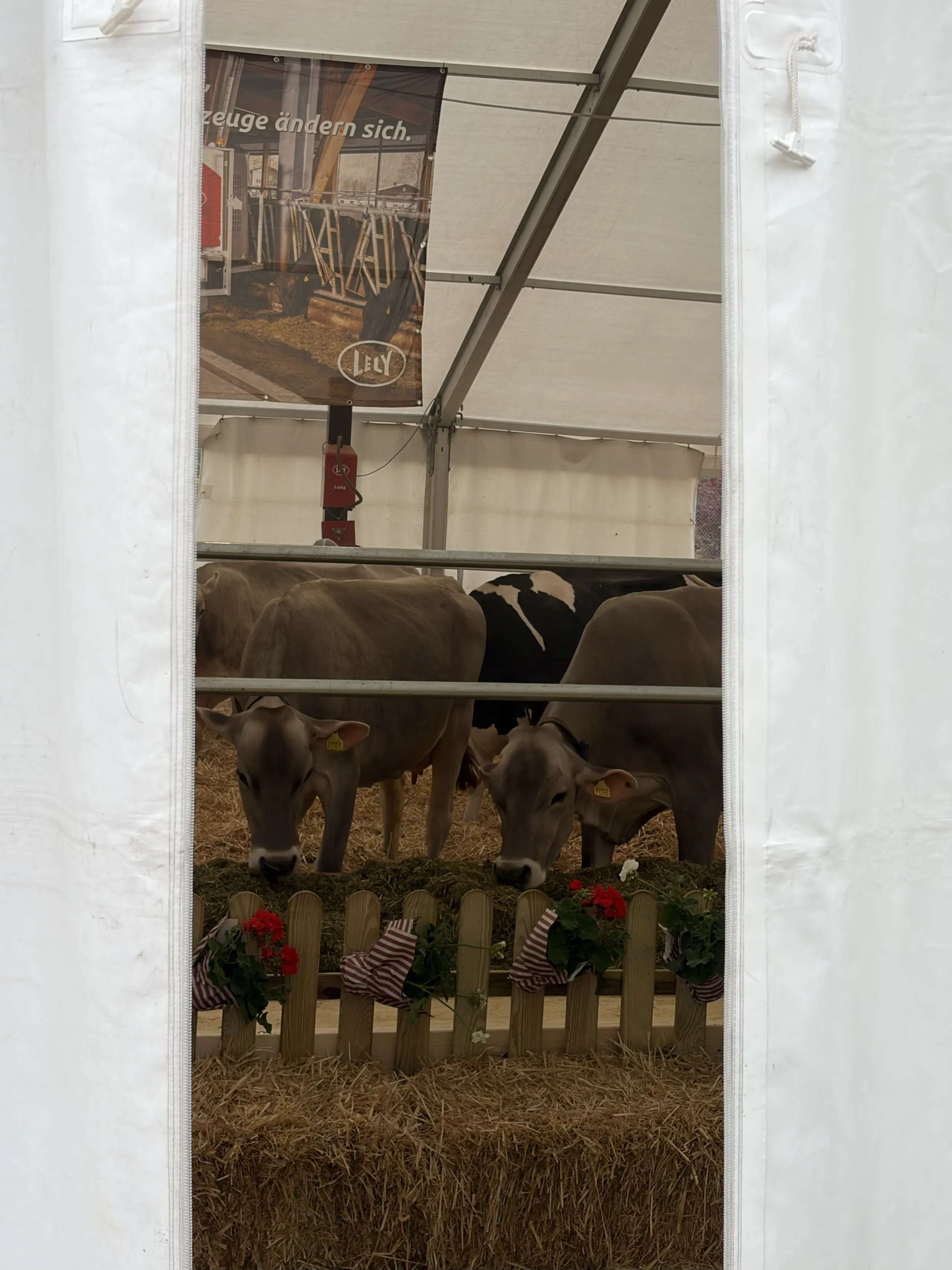
Cows were the most common animals. Every little while, we would see them grazing on the grass, and if we greeted them, we could even receive a solemn look in return. They were also invited into the fair, either to show off advanced systems in high tech cattle sheds or to appear as guests in sheepdog performances. One morning, I woke up to a gentle tune coming from somewhere nearby. I thought some kind of morning wake up ritual was taking place. When I walked closer, I realized the sound came from a large speaker in the cattle shed. I had long heard that playing music could help cows produce milk, but I had not expected it to be real. The cows listened to the music while eating grass, and the staff beside them cleaned their bodies and the area around them. They looked thoroughly dignified.
After spending some time in a place like this, it was easy to notice the detailed arrangements everywhere: cars were guided onto the lawn, people were directed into the fair, horses had to avoid shiny metal, and cows ate grass while listening to music. The countryside looked loose and relaxed, but in fact, management was everywhere.
Once I really got onto the rock wall, I realized that multipitch climbing was even more like this.
Climbing
The climbing area was divided into two sections. One side was a simple area for children, while the other was a higher multipitch area. The route was about 180 meters long, with five belay stations along the way. The wall was not vertical. Instead, it leaned at a noticeable angle and gradually became steeper with height. At the beginning, there were still some holds to grab, but later on, only a few small pits remained, barely enough to hook your fingers into. Most of the time, you had to rely on your feet to balance your center of gravity.
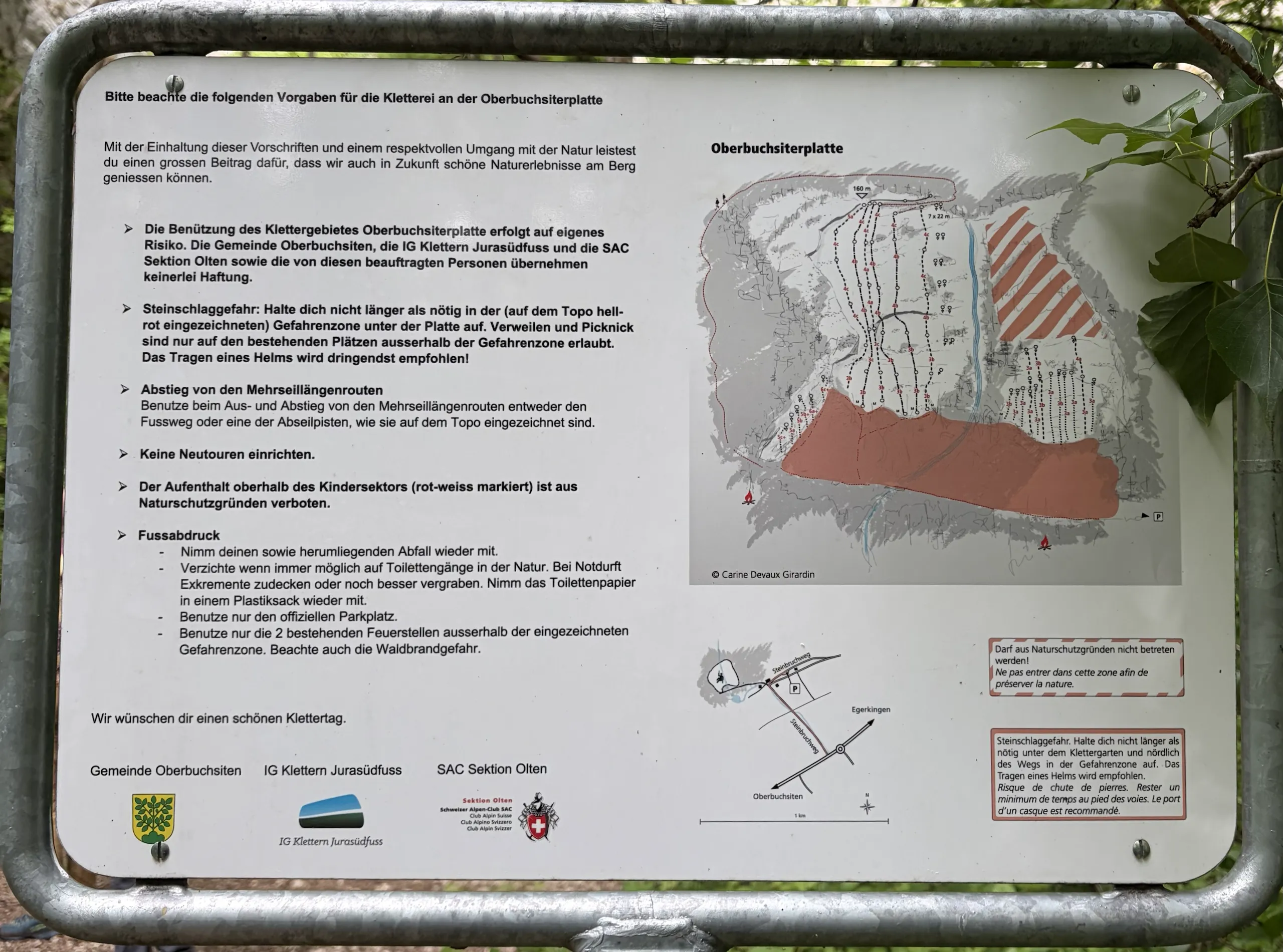
On the second day, we learned multipitch climbing with three people. On the first and third days, we practiced multipitch climbing in pairs. Multipitch means that because the climbing route is long, it has to be divided into several rope lengths. After each rope length, a belay station is built, and the team continues upward in this repeated rhythm.
I feel that in actual climbing, the act of climbing itself accounts for only about forty percent, while management takes up the remaining sixty percent. And what exactly needs to be managed? People, process, gear, and yourself.
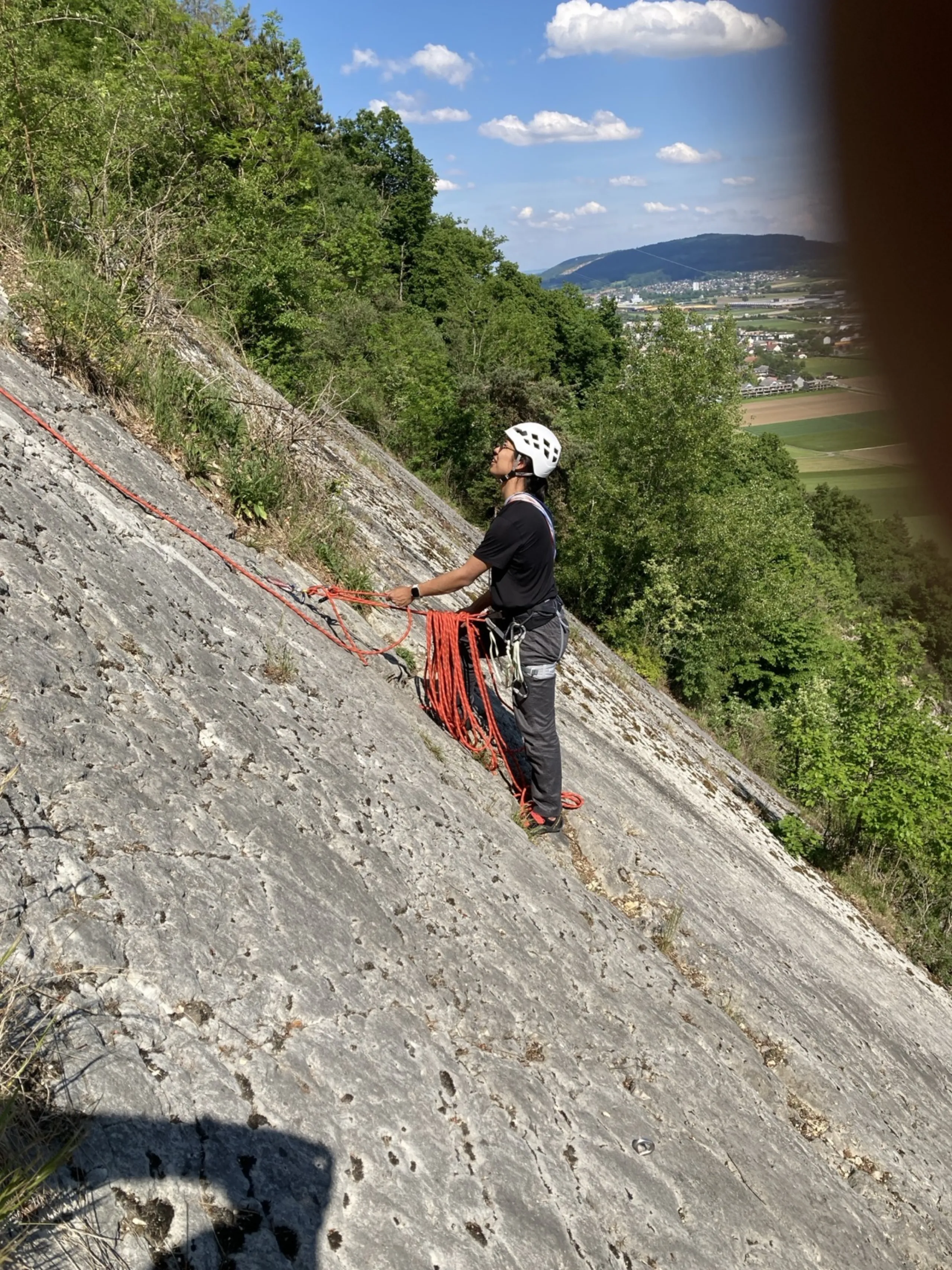
Managing people can be understood from several angles. When the weather is good, a large group of people will all be eager to rush upward, so the order of who goes first needs to be discussed in advance. Once someone gets on the route, they occupy it, and there is no real way to step aside. Then there is the management of climbing partners. Their weight and climbing ability both need to be considered in advance. You probably would not want to place your life in the hands of someone who acts too recklessly.
Process refers to the order of climbing and the sequence of setting up a belay station. For example, the person who arrives first also needs to climb first, so the person who arrives later should place their safety setup below, making it easier for the first person to remove protection and continue. Looking at the safety gear lined up in a crowded order, I could not help thinking of the FIFO principle of a Queue in computer science, where data enters and leaves the queue in first in, first out order. It felt surprisingly similar to the way the gear waited in line here.
Gear is another focus. A heavy load hangs from your waist, and every piece of it is life saving equipment. Not one can be missing. If there is no system for accessing gear, then during the actual climb, when you need to take things in and out constantly, you will certainly end up in a panic. The rope is the most intimidating thing of all. If anything is more exhausting than climbing, it must be dealing with the rope. You can imagine the feeling of untangling earphones, a tangled and chaotic system. Then enlarge its size and weight by more than ten times, and that is what sorting out a climbing rope feels like.
Gear reflects not only management skill, but also creativity. For a protection setup with the same effect, you might use piece A, or you might use piece B. It all depends on your experience and creativity. Once, someone in our group accidentally dropped an important piece of protection gear. In the end, under the coach’s instruction, they used other gear as a substitute and still completed the climb safely.
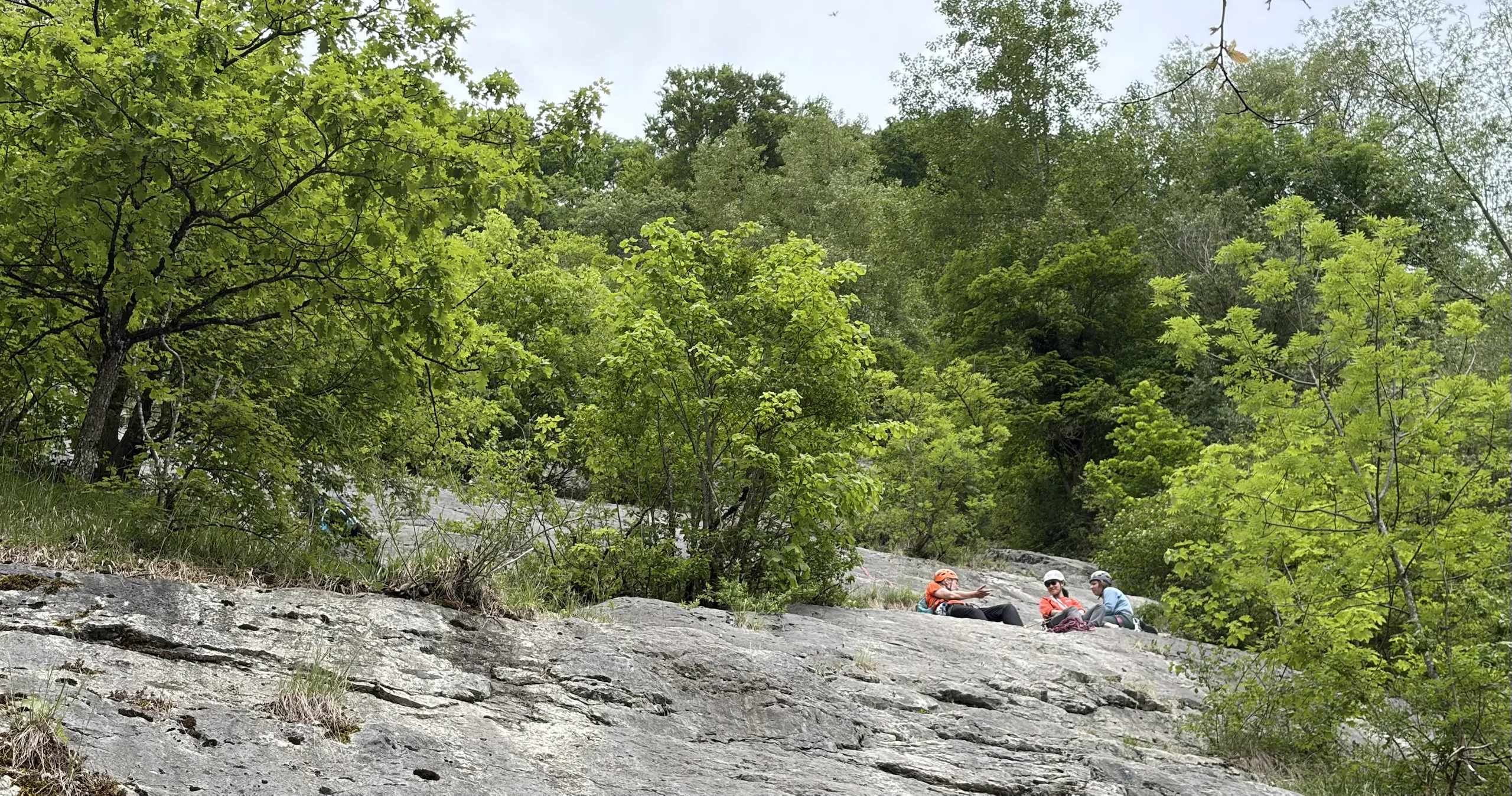
Self management is mostly psychological. Once the actual climbing begins, the inner drama expands and erupts. You think about many things, and many emotions start to grow. As the height increases, fear arrives, and the body instinctively relies on the hands to pull rather than the feet to step. But on the slab, there are no real handholds to grab, so the muscles in the legs become extremely tense in order to keep you alive. On a route more than a hundred meters long, the muscles can tighten to the edge of cramping.
What is strange is that even in this state, you still have to stay organized enough to make sure that every kind of management is correct, and to keep both yourself and others safe. So at this moment, the mind begins to tell the muscles to relax. You suddenly realize that some of the tension from just a moment ago was completely unnecessary. It was only the body’s instinctive reaction to fear. You can hear cowbells at the foot of the mountain, like wind chimes moving in the breeze. You can also hear the sound of water rushing. When you turn your head, you see that a stream is flowing down along the rock wall beside you.
Feeling returns, and control returns as well. Finally, you have a little strength again, and your mind is no longer filled only with fear.
You are able to keep climbing upward.