With only two days left before our departure, I wanted to make the most of my time by the sea and find more opportunities to dive. I asked my diving instructor for advice and she recommended that I see a local doctor for a diagnosis to check if I was fit to dive. She also suggested a driver she knew and told me that I could contact him for help.
His name was Mustafa. While I was adding his contact information, I noticed that his status was a long string of Arabic text. I copied it and asked Gemini for the meaning and it explained that the signature contained the six core wishes of a Muslim’s life. These included beneficial knowledge, a clean livelihood, deeds that are accepted, a humble heart, a tongue that remembers the divine with kindness, and a resilient body.
We communicated briefly so that I could give him my location. After a while, he seemed to realize that my app’s language was set to German and he suddenly sent me a voice message. It is uncommon for drivers to send voice notes because most of them only speak Arabic while their English is just basic. Usually, the most common way to communicate is by texting in English about the time, location, and price. When I played the message, I found it interesting to hear him greet me in a mix of English and German. I replied that I lived in Germany but I was originally from China.
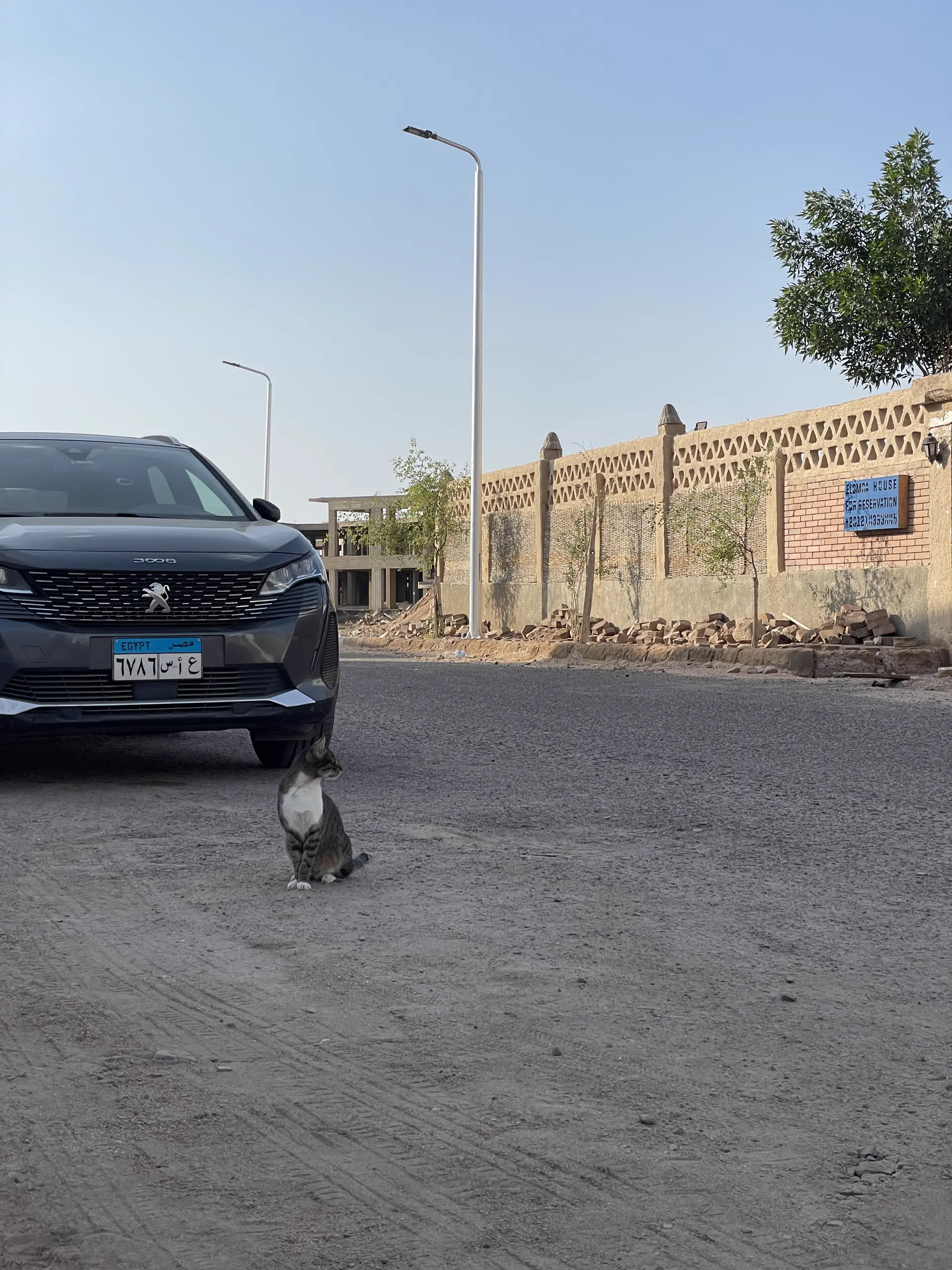
He arrived on time the next morning. Once I got in the car, we began to chat casually. I used the share live location feature in the app to help him find me but I was unfamiliar with the tool and forgot to turn it off after I got in. A few hours later, as we were walking along the beach, our real-time location continued to update. He later told me with a smile that his son had seen the phone and was confused because the passenger’s location was already so close to the doctor and he wondered why I still needed a ride.
I was curious about how he knew German and he told me that he had worked in dive shops for over a decade. There were so many guests from Germany that he eventually learned how to speak and understand the language through constant communication. I spoke a few sentences in German and he understood everything while providing simple replies.
We reached the clinic after a ten-minute drive. The storefront was small and sat next to a construction site for a new resort which was as chaotic as ever. I asked how to register for a visit and Mustafa told me to leave it to him. He pulled a piece of paper from his pocket that looked like a photocopy of a passport on one side. He folded the printed side inward so that the blank side faced out and turned it into a long strip. Holding the paper, we walked to the entrance where a woman was already waiting. Mustafa asked for her name and wrote it at the top of the strip before writing my name below it. Since no one else was waiting, he found a stone on the ground and used it to weigh the paper down at the clinic door. He told me that I could wander around for a bit and come back when it opened because he would message me as soon as the check-ups started.
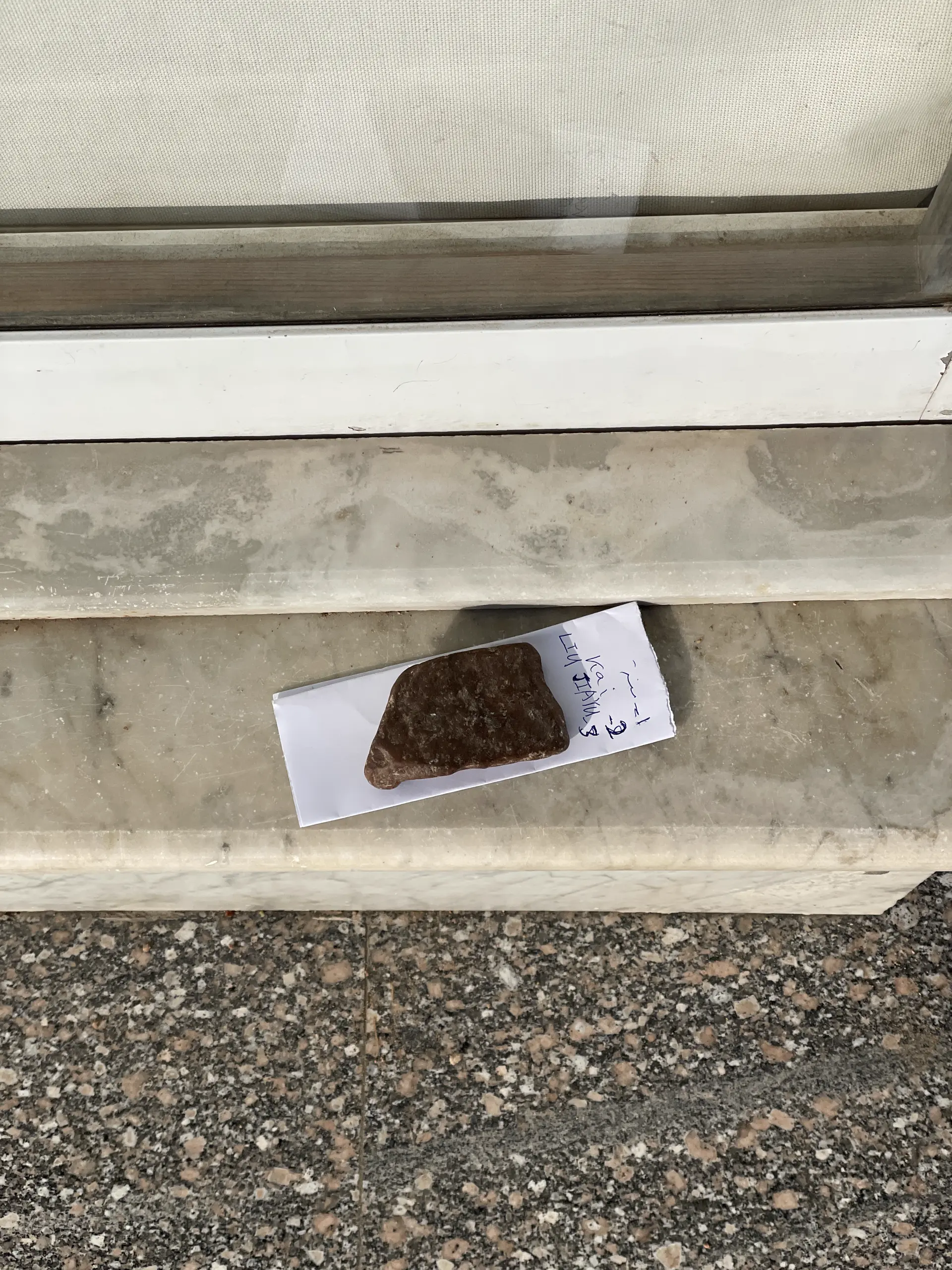
I imagined that he had helped many people like me before but what really made me think was this minimalist or even primitive booking system. It was simple and cheap yet completely effective. So many automated electronic systems have made me feel numb because although they usually work correctly, they still experience mysterious errors from time to time. Electronic booking systems are modern and beautiful but they are also mostly the same. This slip of paper carried different names and handwriting along with the faint marks of a pen running out of ink. It was dynamic and constantly changing and anyone could understand it and use it immediately. It was truly an elegant and efficient solution and I loved such a simple system.
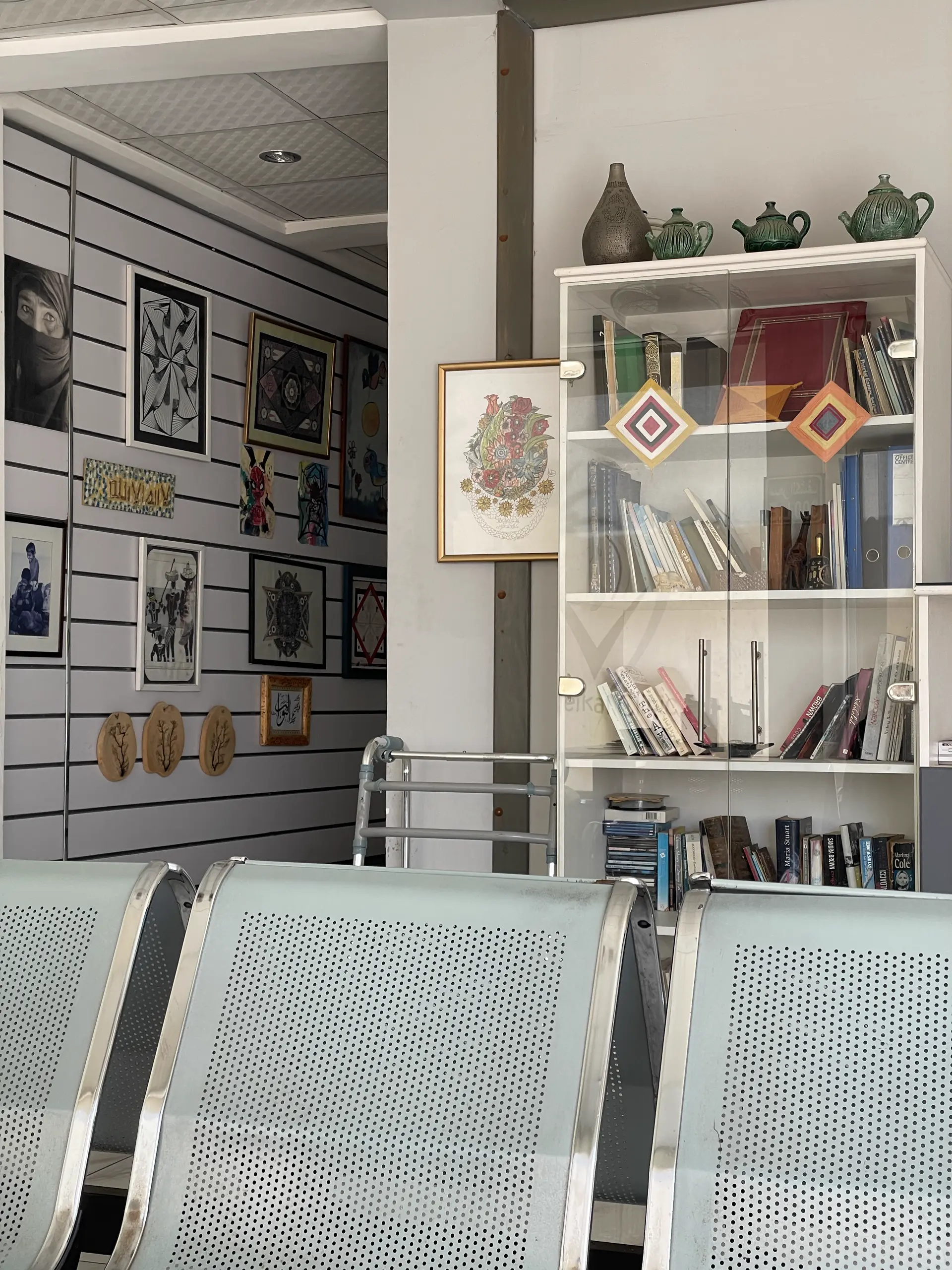
When it was time for the clinic to open, an elderly man appeared in the room wearing a yellow robe and a tan vest. He mopped the floor and opened the door before picking up the small piece of paper that had been held down by the stone. I followed the others into the waiting room which was a small space with standard steel hospital chairs and children’s drawings of the ocean on the walls. There were tattered comic books on the tables and some art pieces on the far walls including Arabic calligraphy and depictions of Islamic women’s eyes.
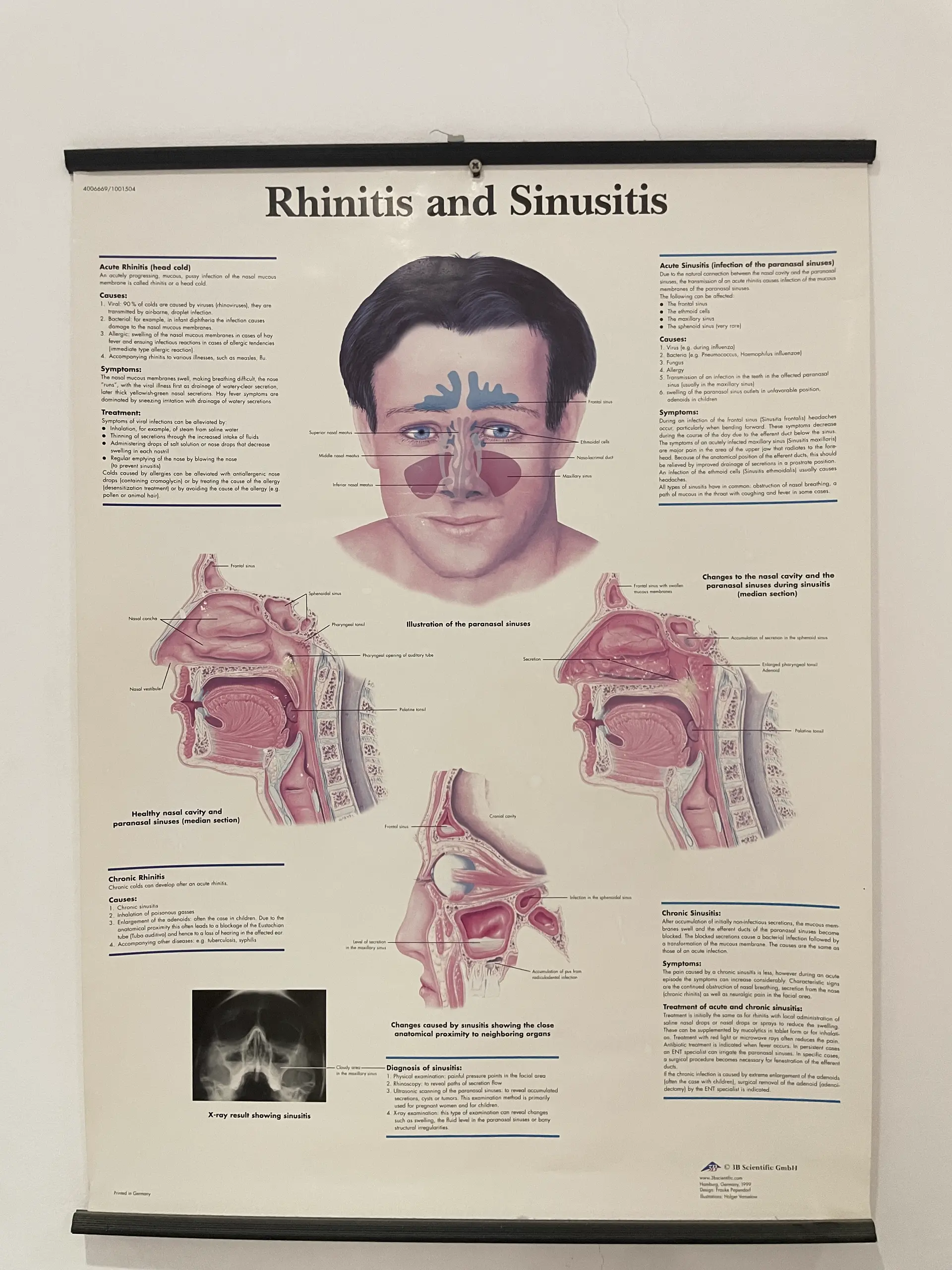
I thought the man was just an assistant but I was surprised when he started calling the name of the first patient. When the person answered, he crossed off the name and led them into the exam room. It turned out he was actually the doctor. I was second in line so I was called in quickly. The exam room was small and dim with only a single overhead light. There was a large anatomical chart of the ear, nose, and throat on the wall as well as models on the desk. He asked me to sit down and I explained my situation in English. He listened and nodded slowly before asking a few minor questions and using professional equipment to check my ears and nose. During the exam, he also asked me to try equalizing my ear pressure.
After the examination, he explained that it was not a common injury but rather an inflammation of the nasal mucosa that caused the Eustachian tube to become blocked. This meant that fluid could not drain properly and that was why I was hearing strange noises. His English was incredibly fluent and he explained everything with a slow, calm, and rhythmic tone. I did not understand many of the technical terms but I could guess the general meaning. He prescribed several standard medications that were so common that I could name them fluently when I described them to other diving instructors later. He also specifically told me to use a nasal spray before and during my dives to avoid the risk of further inflammation.
Once the session ended, I paid him 300 Egyptian pounds which is about 6 Euros. I told him that he was likely the best ENT doctor since he practiced in such a famous diving destination. He placed his hand over his heart and smiled humbly to express his gratitude. With that, my visit was complete.
We returned to my accommodation and I said goodbye to Mustafa. He stepped on the gas and drove off to find the next guest who might share a story with him.
I stood by the road with many thoughts in my mind. Both digital booking systems and expensive health insurance felt unnecessary in that moment. My problem was finally solved by a stone, a piece of paper, and a fee that was almost free. This is perhaps the unique character of this land because it is raw and casual yet it possesses a simple wisdom that goes straight to the essence of things.
Magical stories always seem to unfold on this enchanted land and I have another anecdote about my search for medical care.
We often think that rock climbing or diving are the most dangerous activities but the most troublesome thing I encountered during this trip was actually a case of paronychia. I had trimmed my nails too short which led to a minor infection and a small bump formed that felt painful when pressed. It was around nine or ten in the evening and I was worried that my foot would get worse and ruin my climbing plans for the next day. While I was feeling distressed about it my girlfriend offered to go out and find some medicine for me.
She left in such a hurry that she did not check the location beforehand and only realized after she stepped outside that her phone had no signal. She had to find her way by memory alone and walked along the dark streets for a while until she reached a building only to discover it was a dental clinic. She was disappointed and ready to head back but she coincidentally ran into Mo who is the manager of our hostel at the street corner. She quickly asked him where she could find a pharmacy and Mo pointed across the road to show her where it was. She thanked him and crossed the street until she finally found a pharmacy that was luckily still open.
Inside the pharmacy the clerk did not speak much English so she took out her phone to show a photo of my infected nail. While she was showing the picture another customer walked in who looked like an intellectual. By a stroke of luck he spoke Arabic and English along with a little bit of Chinese. The clerk brought out two identical tubes of antibiotic ointment from a large shelf in the back and gave one to my girlfriend and one to the man. They were surprised to discover such a strange coincidence because he was also there to buy medicine for a friend who had the exact same nail infection.
The clerk then brought out a small white bottle with an Arabic label that carried an air of ancient Middle Eastern mystery. He explained to both of them that they should use this medicine for the first two days to draw the pus out and then apply the antibiotic cream if the infection remained. The intellectual became very interested and asked for more details about the secret of this bottle. He originally intended to buy only one tube of ointment but he decided to purchase the mysterious bottle as well after hearing the explanation.
When she returned to our accommodation she excitedly shared the story of her evening adventure. I listened to her and examined the bottle as it felt increasingly mysterious to me. It seemed as though all the coincidences in the world were gathering around this object and I felt that failing to use it to heal myself would be a slight against the fate of the universe. I opened the cap and saw a greyish-yellow ointment submerged in clear glycerin. I looked it up on my phone and learned that the mud was actually kaolin clay which has powerful physical adsorption properties. It works like a magnet to pull pus from deep within the skin to the surface.
I was half-skeptical but I applied the mud to the gap in my nail for three or four consecutive days. The swelling miraculously disappeared and I could finally walk without feeling any pain. In a literal sense, my toe was healed by a series of accidents and chance encounters. It truly is a magical land.