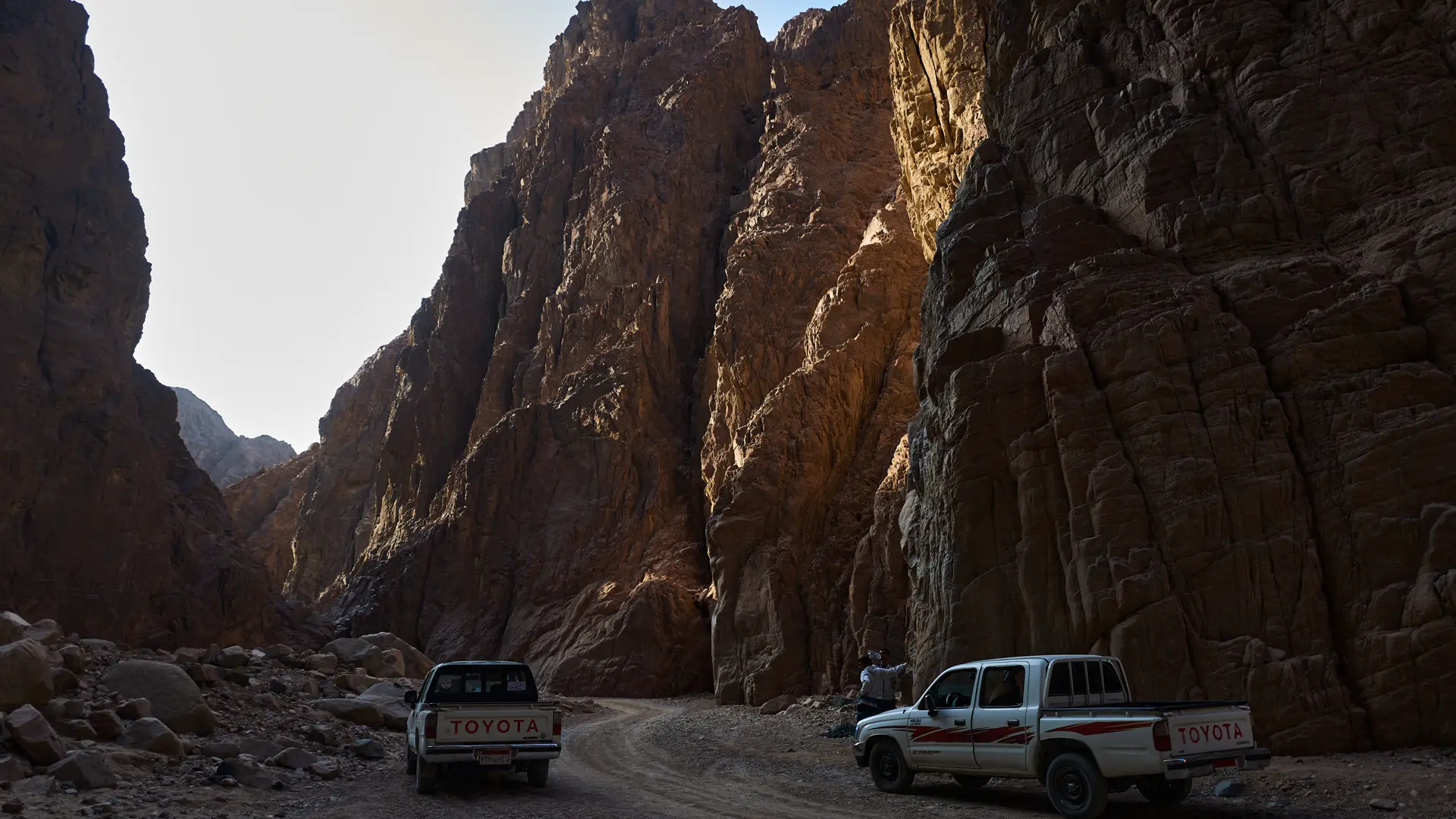
Less than half an hour by pickup truck takes you into the canyon. This is Bedouin territory where self-driving is virtually impossible, so having a local guide lead you into the mountains is almost the only choice. Perhaps it is because it is December, or simply that the mountains flanking the canyon are too high, but for most of the time, sunlight only graces the peaks and cannot penetrate to the foot of the mountains. The air is dry and crisp, and the temperature is exceptionally comfortable.
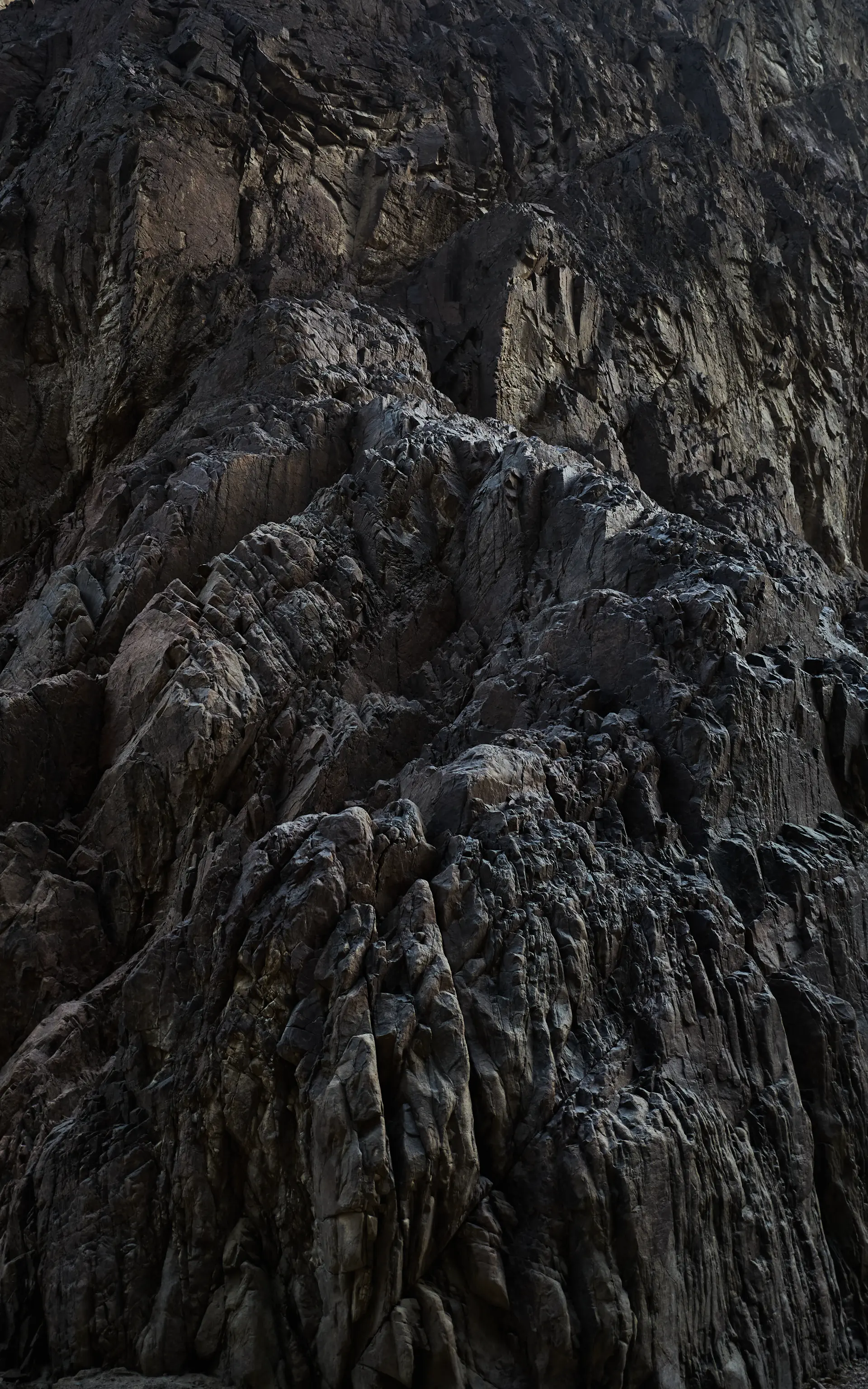
The mountains, composed of masses of grey-yellow granite, loom large and blot out the sun. Standing before them creates a veritable dizzying sensation. The various structures and crevices on the exterior of the rocks are seen as excellent handholds and footholds in the eyes of climbers, making this a renowned climbing destination.
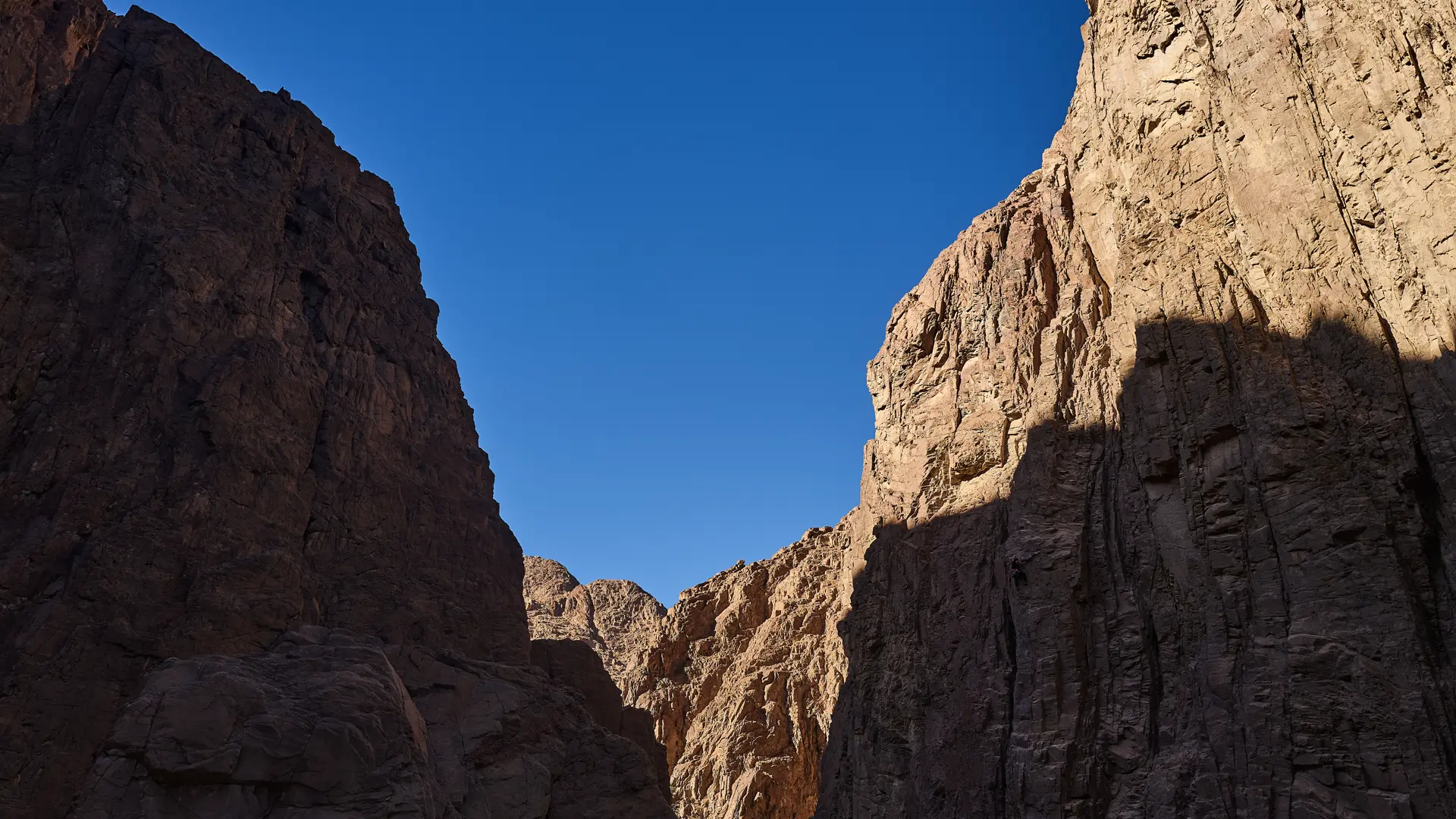
Rows of metal hangers are pre-installed on the rock face. Adopting the Lead Climbing method requires the climber to start from the bottom carrying a rope, clipping a quickdraw and the rope into every hanger they pass. If physical strength fails and an accidental fall occurs, the body will be braked by the nearest quickdraw. Even if a single anchor point fails, the existence of multiple protection points makes total system failure highly unlikely. Therefore, although rock climbing looks frightening, the actual safety factor is very high. When the lead climber reaches the top and sets up the anchor station, the belayer below can tighten the rope to assist their descent. Beginners can subsequently utilize this pre-set rope to perform the most basic Top Roping.
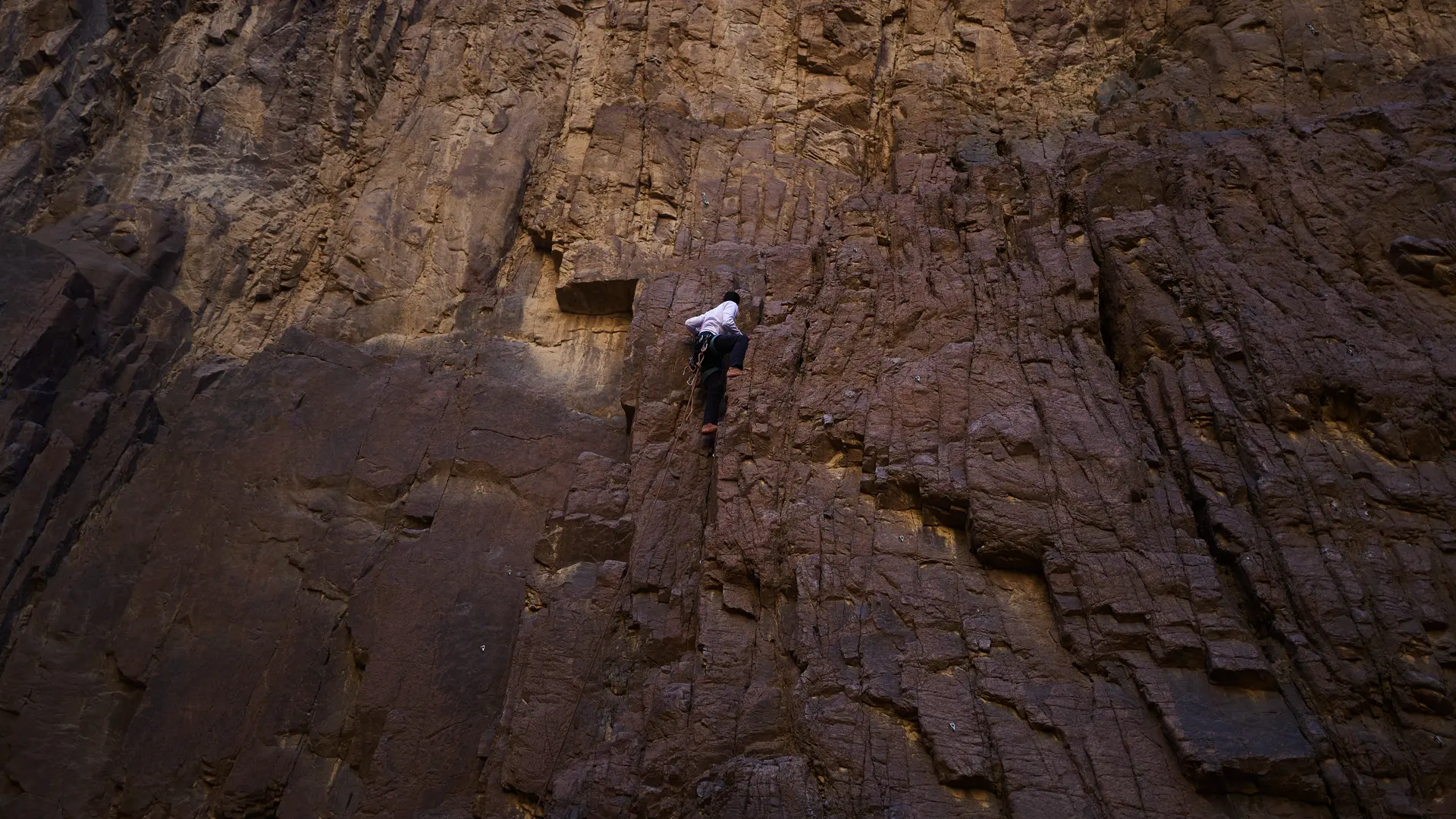
A more primitive form is known as Free Solo, which involves climbing upward relying solely on body contact with the rock wall without the use of any ropes or protective gear. Our local guide, Mohamed, sometimes chooses this method to reach the top and set up top-rope safety systems for beginners. Although he typically selects routes of lower difficulty, the mere act of climbing without any protection, and doing so barefoot, is enough to make one’s heart pound.
The tactile sensation of real rock is superb. Although the surface is somewhat slippery, it is far harder and more solid than the artificial holds in a gym. The interior is a solid core that feels reassuring to the touch. The structure is endlessly varied, with protrusions of all sizes combined in wild abandon.
Donning the gear, I approach the rock face and wait until the moment before climbing to put on my climbing shoes. While the rock will not destroy the shoes, the fine grit and gravel will. They are hard and sharp, and they quickly score the rubber soles with mottled patterns. After tying the knot in the rope Mo just lowered from above, and mutually checking that the safety settings for both climber and belayer are correct, the climb can finally begin.
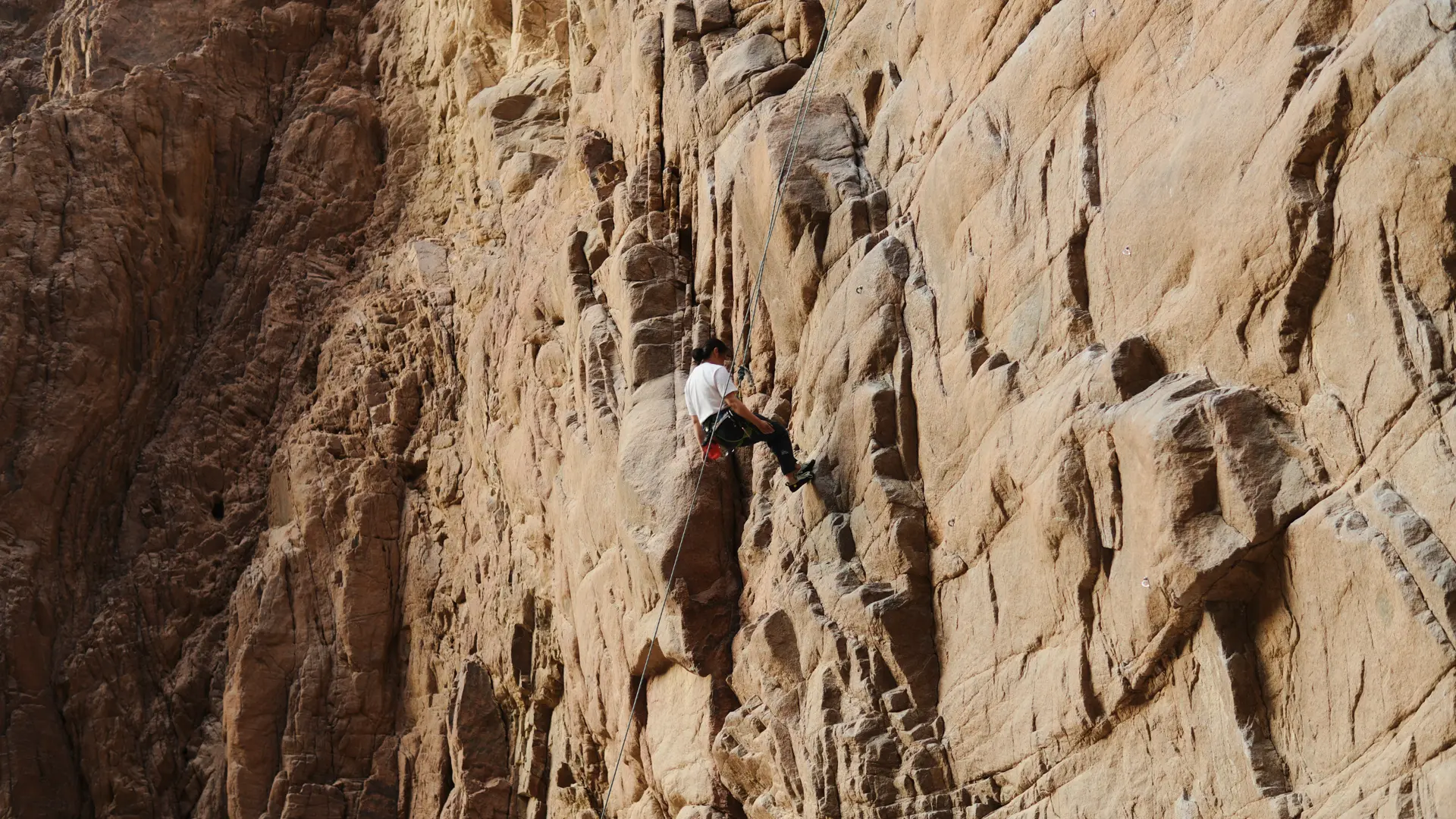
It is different. The feeling is completely different from gym climbing. Without fixed colors and specific routes, the path feels like entering a fog or being assaulted by a sandstorm, making it difficult to identify with the naked eye. Consequently, all the body’s sensory receptors must be opened. Arms and fingers begin to probe the rock like radar. If an attempt to find balance here fails, one might as well try over there. With so many variations, there is always one that suits you. Touch a little, turn the body, and touch again. This trial and error may last a long time, but the rock will always wait for you with infinite patience. Then, suddenly, in a specific instant, the fingers find a special protrusion. It feels just the right size to grip. Hanging onto it, the whole body seems filled with balance and power. The “Aha moment” arrives. The body feels as if it has received some kind of summons and can suddenly lift upward with strength, immediately locking a toe onto a solid rock point. A new stability is achieved, and one can explore and scan once again. Every mysterious contact brings me joy, making me unable to help but shout, “So cool!”
Of course, that thrill cannot last forever. The vast majority of the time is still filled with confusion and tension. Within the visible scope, I cannot find a usable point for what feels like ages. The strength in my legs and arms drains away bit by bit. As I encounter my critical limit, words starting with F cannot help but slip out. At this moment, all I hear is Mo faintly saying from below, “Do not Fxxx.” This sense of casualness is also reflected in the wording of his commands. One phrase that remains fresh in our memory is “Stand Up.” It is such a simple instruction, yet on the rock wall, it becomes an incredibly difficult action to realize. Either the angle is insufficient or the strength is lacking. It makes me think of a phrase: Great truths are always simple, but behind them lies so much painstaking effort.
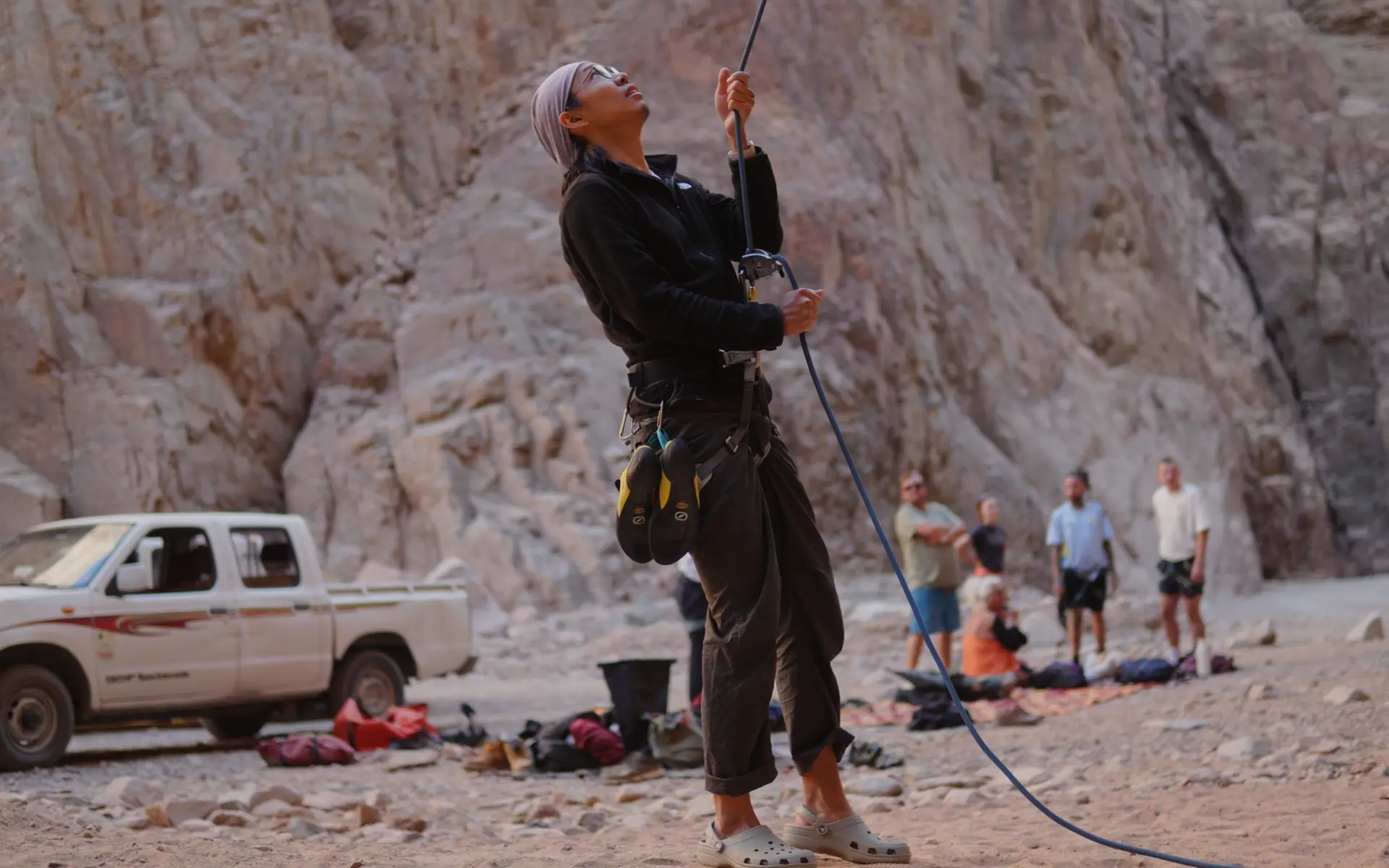
Upon reaching the summit, after experiencing muscle soreness and toil, what you get is not a ceiling, but the vast, towering mountains and the sky. This is the best reward for rock climbing.
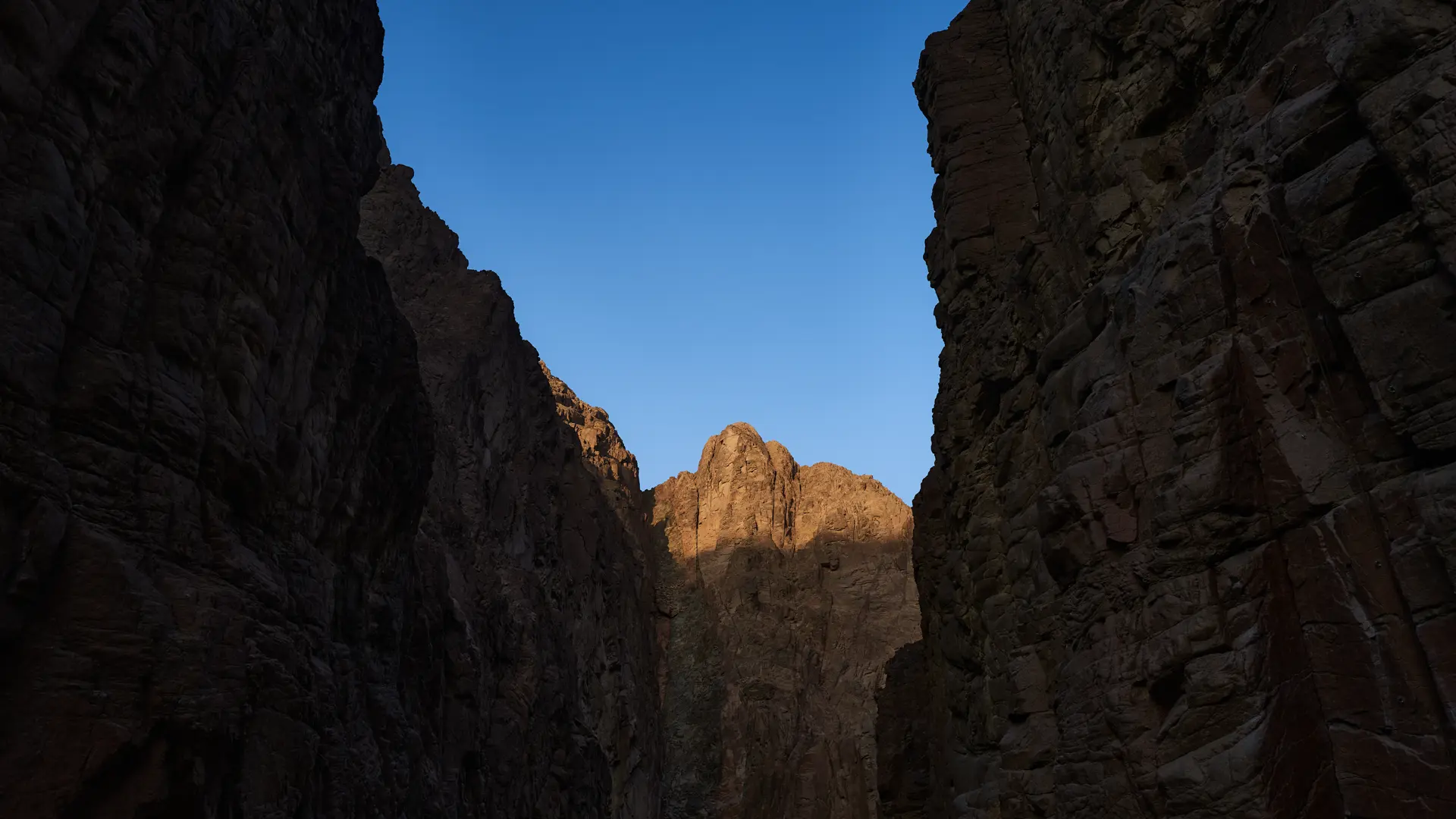
Time slips away. The sun gradually glided behind the valley, and the sky began to darken.
People gradually departed in their vehicles, and the valley became somewhat quieter. The light dimmed, and the colors reflecting off the valley shifted from yellow to greyish-black. The massive rocks appeared much sterner, connecting with the sky to create an oppressive sensation.
Before it went completely dark, we tried to squeeze in a few more routes to save this precious time. Taking advantage of this interval, Mo had already lit a bonfire with his back against the rock wall. Beside the fire lay firewood gathered from the valley, placed upon a large Arab carpet. He told us this was the most traditional Bedouin custom.
He and his assistant uncovered dish after dish of dinner from the back of the pickup truck. There was a stew made of potatoes and onions, a simple salad, and roasted chicken. We asked who cooked it, and he said it was his mother. Although it sounded simple, the taste was surprisingly delicious. Paired with the valley bonfire and the fatigue after climbing, I felt it was the best dinner of the entire trip. I felt my stomach was like a bottomless pit, continuously sucking in food, yet I did not feel uncomfortably full at all. We thought about saving some food for Mo and his assistant, but he humbly told us that this was prepared specially for us and asked us to enjoy it to the fullest. While my mouth was saying thank you, another piece of chicken suddenly appeared on my fork.
Night fell. This time there was no bright full moon, so the stars became significantly clearer. The flames flickered, and the wood crackled. After eating our fill, people sat together. Some lay on the carpet while others leaned against the rock wall, but everyone’s eyes drifted between the flames and the stars. The relationships between people seemed to grow closer, and the topics of conversation appeared to answer the call of the night, becoming deep and complex.
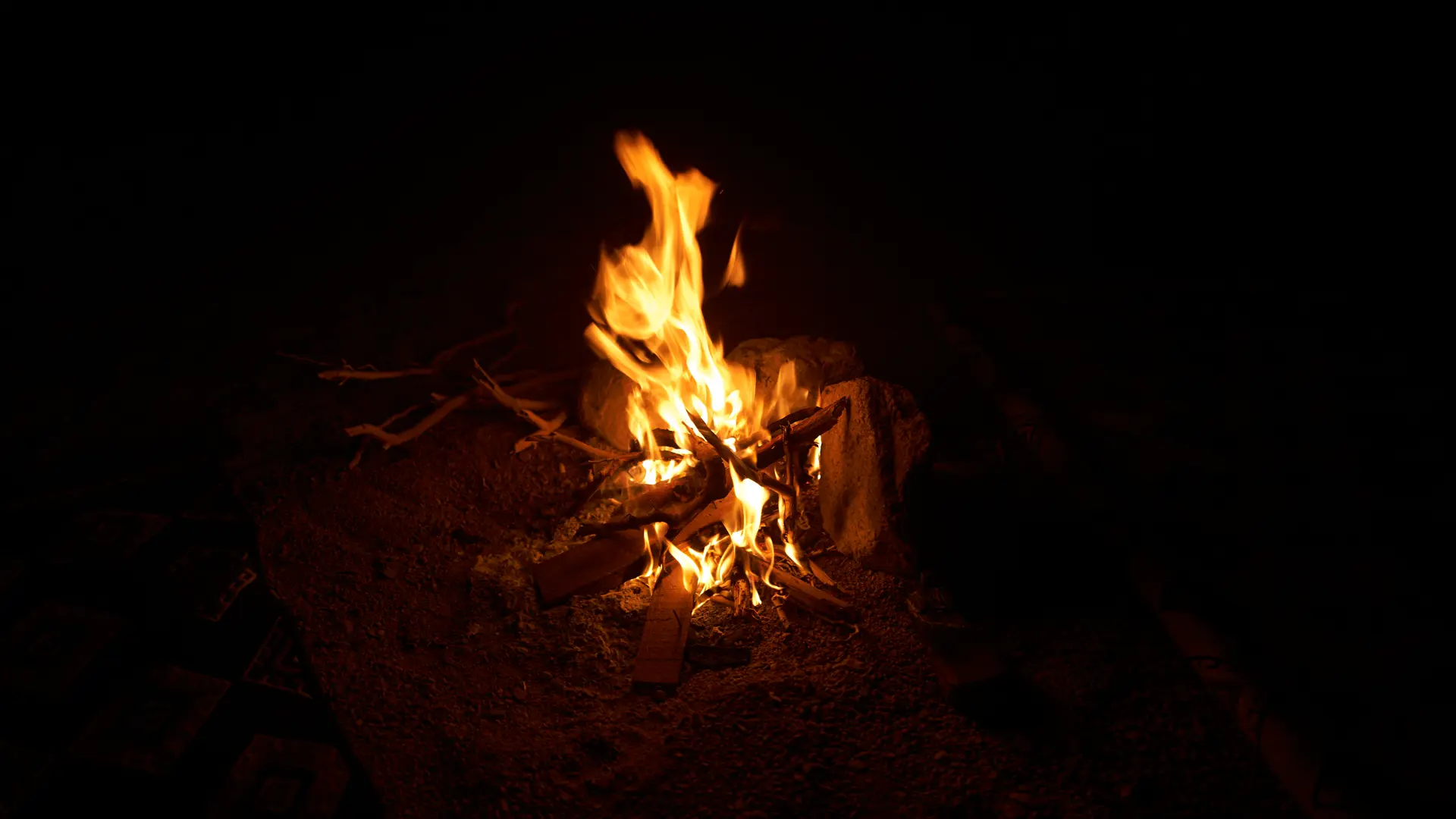
I took the tea Mo had just brewed. Its warm and sweet flavor was delightful as I lay on the carpet, staring blankly at the sky. As the firewood was gradually consumed, the flames were tamed and became less fierce, while the quiet firelight made the stars stand out even more brightly. The black silhouettes of the rocks outlined several distinct dividing lines against the sky, and my field of view was narrowed into a single beam.
The flames finally dimmed, and the sounds of conversation faded away. All sounds were absorbed by the rocks and sand, leaving the valley incredibly quiet. In my memory, I have never experienced such a quiet moment. The rubbing sound of any movement, and even the beating of my heart, became incredibly clear. I floated up, drifting in the canyon, bathed beneath the stars. All elements were natural and primitive, continuously radiating ancient scents toward me, enabling me to strip away modern technology and thought to return to the most original state and feeling. At this moment, I realized how noisy and complex the noise existing in daily life is. There are always ticking sounds in our ears, coming either from neighbors or devices within the room. Even when closing one’s eyes, there is always some light penetrating through. When sleeping, noise continues to haunt us. They seem to have become the culprit of nightmares, forcing the body to unceasingly accept and feel them throughout the entire life cycle. It has never been truly dark, nor has it ever been truly quiet.
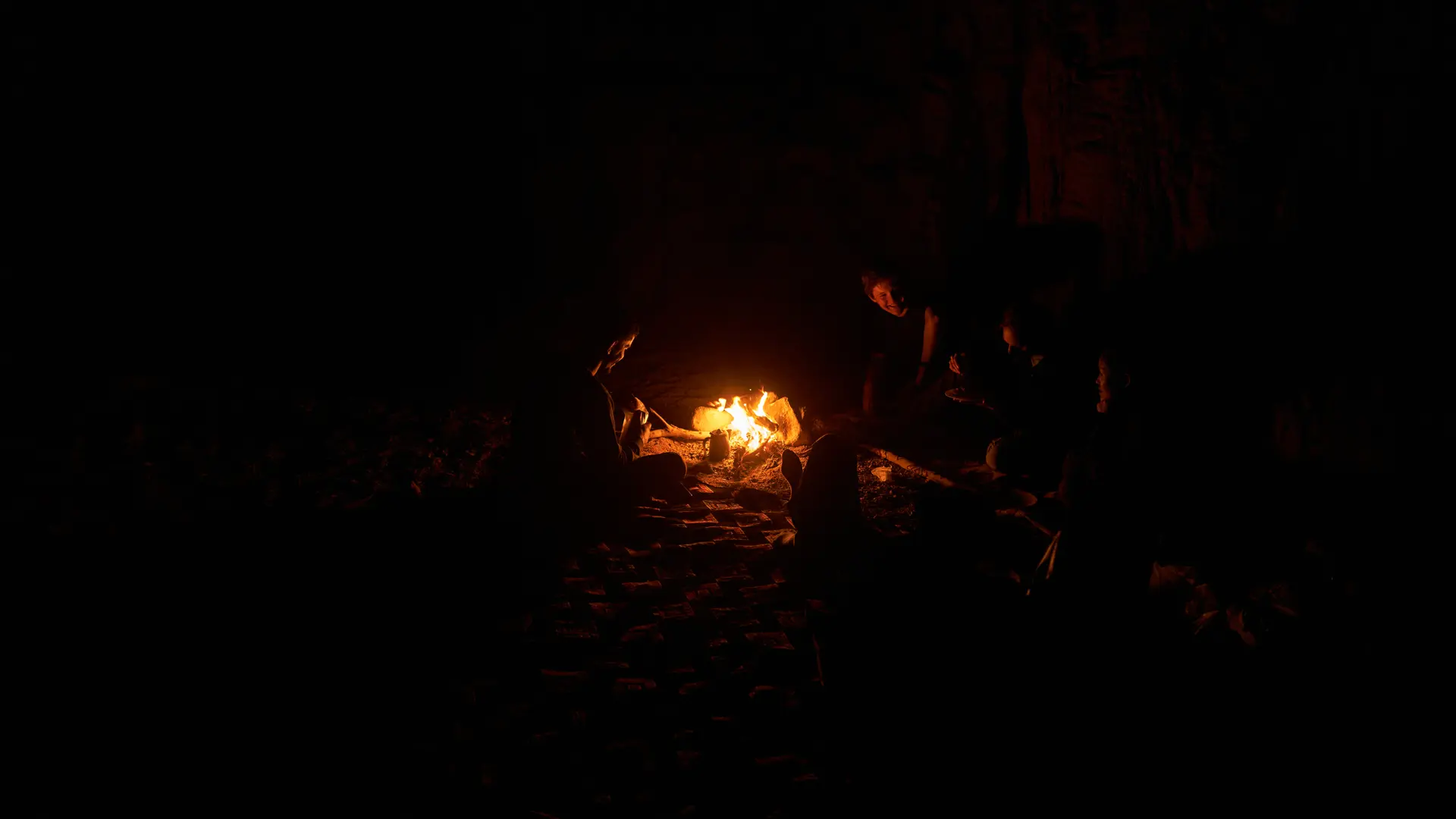
The silence in the valley was like a clear, cold spring flowing over my sensory receptors, cleansing them and making them sensitive. I could feel its ability to cleanse, which most likely did not come from childhood memories of the city, but felt more like being in the cradle, or even before life was born. Biological genes whispered in my ear, “Feel it well. This is a gift, the most precious present of life.” Similar perceptions flowed between the people sitting around the fire. There was no need to speak, nor to transmit any signals, only to float in the here and now. Everyone shared this primordial tranquility, rising and falling at the same frequency between the starry sky and the rocks.
Time passed even faster. The bonfire eventually burned out, and we had to get up and leave. A quiet dream was startled awake, and everyone was reluctant to part, wishing we could wander here all night. Sitting on the back of the truck, I watched the black mountains on both sides retreating continuously. Illuminated by the car lights, they changed shape, assuming a completely different posture from the daytime. As the truck drove onto the main road, the streetlights on both sides and the distant small town gradually lit up, and the stars in the sky became dim, receding into another dimension.
We drove back toward that artificial sensory world filled with harsh light and noise, while that dreamlike tranquility had already extinguished along with the bonfire, left behind in the valley forever.